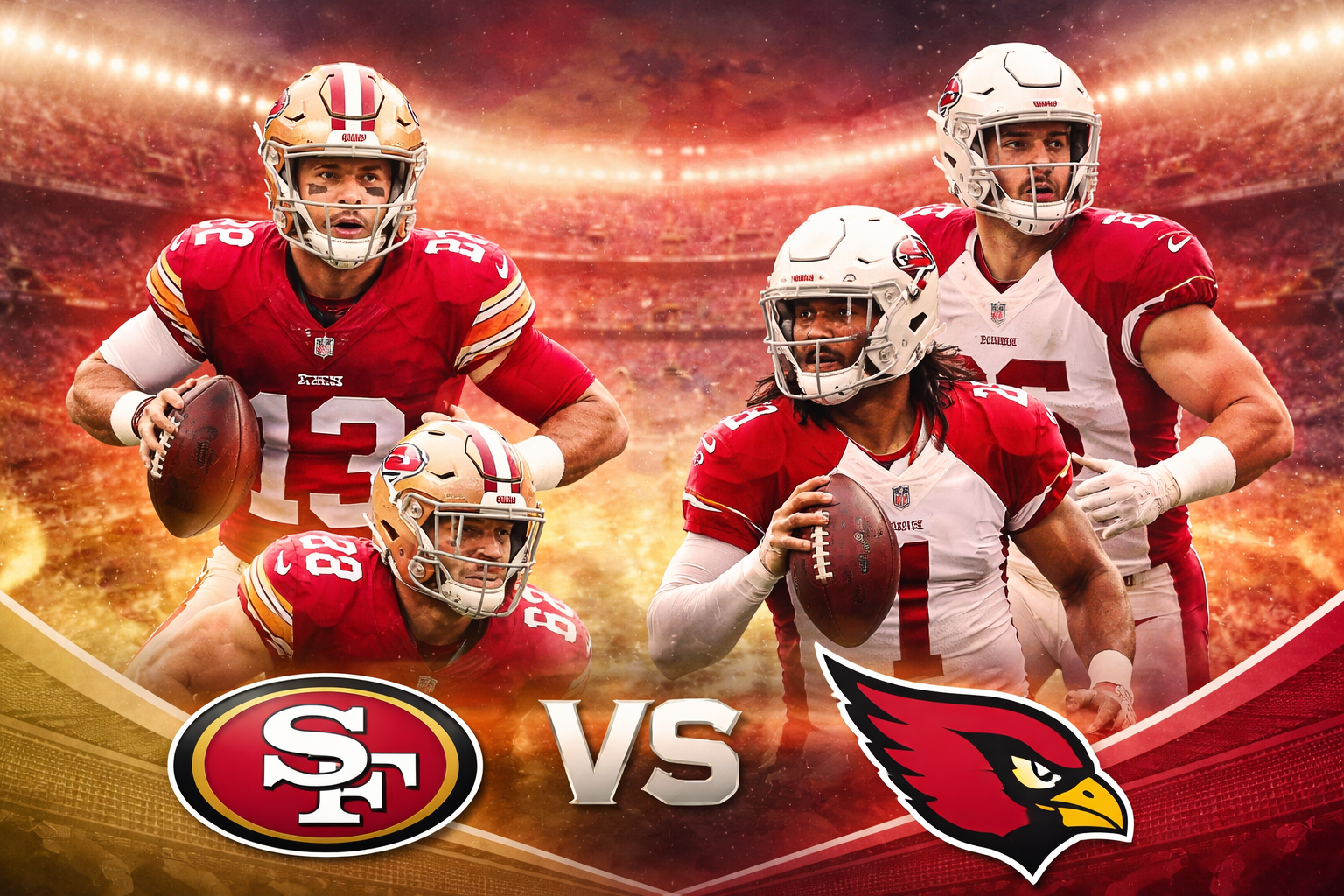
49ers vs Arizona Cardinals Match Player Stats
Are you checking the latest division numbers and wondering why one game between the San Francisco offense and Arizona defense can look balanced for a quarter, then suddenly break open? That exact pattern appeared again when the latest meaningful meeting between the San Francisco 49ers and the Arizona Cardinals produced a scoreboard that looked decisive long before the final whistle.
In the first fifteen minutes, Arizona actually showed enough defensive shape to slow early rhythm. Then one sequence changed everything. When Brock Purdy hit the middle window off play action and the linebackers hesitated on the next snap, San Francisco gained the type of control that does not always appear in a quick box score.
According to official 2025 season game reporting, San Francisco finished that meeting with 41 points while Arizona scored 22, and the most important detail was how efficiently San Francisco converted short fields into touchdowns rather than field goals. That difference shaped every later possession.
If you are reading this to understand the numbers properly, the goal is not only to list totals. It is to explain which player stats actually changed the game, which performances are repeatable in 2026, and which numbers look bigger than their true impact.
By the time you finish, you will know why some stats mattered immediately, why others came too late, and what these trends suggest before the next division meeting. 🏈📈
Why this rivalry keeps producing valuable player analysis
Division games reveal habits more clearly than random regular season matchups because both coaching staffs already know each other’s pressure calls, route combinations, and personnel preferences.
That means a 12 yard gain in this rivalry often carries more analytical meaning than a 25 yard gain against an unfamiliar opponent.
What stood out most when reviewing the latest game was how quickly San Francisco forced Arizona into reaction instead of anticipation.
Once a defense begins reacting late:
- pre snap reads become easier
- route timing sharpens
- red zone stress increases
That is exactly why quarterback numbers in this matchup need context.
A passing line may look efficient, but the real question is whether that efficiency came before or after defensive structure broke down.
That brings us directly to the quarterback battle, where timing mattered more than total attempts.
Brock Purdy’s passing numbers explained the offensive control
Brock Purdy finished with 19 completions on 26 attempts for 200 passing yards and 3 touchdowns in one of his cleanest division performances of the recent season.
The total yardage does not immediately look dominant, yet the efficiency tells the true story.
Three details stood out:
- He avoided unnecessary second reads
- He released the ball before Arizona rotated late
- He trusted short middle throws near scoring territory
The strongest sequence came in the second quarter, when one short completion forced Arizona to tighten inside coverage, and the next snap immediately attacked the vacated space.
That is the type of quarterback control that rarely appears in highlight clips but changes the full shape of a game.
A casual reader may focus on 200 yards.
A serious analyst notices 3 touchdowns on limited volume.
Key Analytical Takeaway
Source: Official 2025 NFL regular season box score
Context: Purdy produced 3 touchdowns while San Francisco scored in every quarter
Implication: Arizona must break first read timing early, because once Purdy settles, touchdown efficiency rises sharply
What makes this more important for 2026 is that Purdy’s strongest division performances usually come when he does not need to chase explosive throws.
The next layer becomes clearer when you look at Kyler Murray’s side of the field.
That comparison shows why similar possession counts did not produce similar scoring outcomes.
Kyler Murray’s stat line looked active but not decisive
Kyler Murray still produced stretches where his movement created temporary openings, but the offensive rhythm never stayed stable long enough.
The issue was not talent.
It was sequence disruption.
Several drives followed the same pattern:
- early pressure forced a shorter second down
- third down became predictable
- scramble options arrived too late
Murray’s late completions improved total production, but many came after San Francisco had already established scoreboard control.
That distinction matters because late production under softer defensive spacing can inflate perception.
When I looked at one late third quarter series, Arizona finally gained tempo, but San Francisco had already shifted toward protecting explosive zones rather than attacking every underneath throw.
That changes how every stat should be read.
The box score records yardage.
The film records leverage.
And leverage often explains why two similar passing totals do not carry equal value.
The running game makes that even clearer.
Christian McCaffrey changed the game before the defense could adjust
Christian McCaffrey finished with 127 rushing yards and 4 total touchdowns, but even that headline number does not fully explain his effect.
His first few touches forced Arizona into difficult choices:
- widen for outside release risk
- protect interior gaps
- account for receiving motion
Each choice opened something else.
One second quarter stretch showed this perfectly. Arizona tightened after an inside run, McCaffrey shifted outward on the next snap, and the middle lane opened immediately.
That is why his influence extends beyond yards per carry.
He changes defensive math before the handoff even arrives.
This is also why San Francisco’s offense often looks smoother when his touches arrive early rather than late.
A running back stat line can describe production.
It cannot fully capture how defenders move before contact.
That movement then created opportunities for the tight end.
George Kittle’s touchdowns came from precision, not surprise
George Kittle scored twice, and both scores reflected route precision more than broken coverage.
His strongest traits in this matchup were:
- delayed release timing
- shoulder leverage near the break
- body control in short windows
Arizona often defended the first movement correctly.
The second movement kept winning.
That subtle difference matters because division opponents usually know the route concept.
The winning detail becomes execution after recognition.
One red zone snap especially showed veteran craft. Kittle did not outrun the defender. He simply created half a step exactly when the throw arrived.
That half step became six points.
This matters because many readers assume explosive athletes dominate rivalry games.
In reality, technical route detail often decides scoring inside the twenty.
The next section shows the broader comparison clearly.
Comparison Table: Matchup Stats That Actually Mattered
| Category | 49ers Lead Player | Cardinals Lead Player | Why It Changed the Game |
| Passing Touchdowns | Brock Purdy, 3 | Kyler Murray lower scoring output | Red zone efficiency favored San Francisco |
| Rushing Control | Christian McCaffrey, 127 yards | Reduced impact from Arizona ground game | Early lead changed play calling |
| Tight End Production | George Kittle, 2 TD | Limited equivalent answer | Middle field advantage |
| First Half Scoring | San Francisco dominant | Arizona reactive | Defensive stress increased early |
A table matters here because readers often compare totals without understanding scoring context.
The defense explains why that gap widened further.
San Francisco’s defensive pressure arrived before the stat sheet showed it
The sack totals alone do not fully explain the defensive advantage.
The real difference was pressure timing.
San Francisco repeatedly forced decisions earlier than Arizona wanted.
That produced:
- shorter throws
- reduced route depth
- less second reaction time
One snap in the second quarter looked ordinary live, but replay showed disciplined edge containment preventing Murray from escaping where space briefly appeared.
That type of pressure often disappears from casual summaries.
Yet it wins division games.
Arizona did create isolated pressure later, but by then Purdy often had already released the ball.
Pressure after release looks active.
Pressure before the read changes possession.
That distinction matters more than sack count alone.
The next section explains why Arizona still reached 22 points without truly regaining control.
Why Arizona scored late but never reset momentum
The 22 points can suggest a more competitive second half than the actual game flow showed.
Timing changes everything.
Much of Arizona’s improved movement came after San Francisco protected lead structure rather than aggressively contesting every short area.
That allowed:
- easier underneath completions
- quicker sideline gains
- reduced risk throws
This is common when a leading defense prioritizes clock control.
It does not mean offensive control fully returned.
One fourth quarter drive looked efficient on paper, but San Francisco had already shifted toward protecting boundaries and limiting deep damage.
That makes late stats useful only when interpreted carefully.
This is why experienced analysts separate:
- competitive phase production
- catch up phase production
The next question becomes more important for 2026 projections.
Which trends actually carry forward?
What these player stats suggest for 2026
We are now in 2026, and division trend analysis still treats this matchup as highly predictive because coaching identities remain stable.
Three patterns matter most:
Purdy becomes dangerous when first reads stay clean
His best division performances are rarely his highest yardage games.
They are his lowest hesitation games.
McCaffrey still shifts coverage before touching the ball
Defenses react to him before the snap finishes.
Arizona must improve first quarter recognition
When Arizona falls behind early, San Francisco controls pace too easily.
That means the first scripted fifteen plays in the next meeting may decide more than total talent.
And readers who study only final totals often miss that.
Key Analytical Takeaway
Source: 2025 scoring distribution and official drive summary
Context: San Francisco built major first half separation before Arizona’s later response
Implication: Arizona’s best chance in future meetings is preventing early red zone losses
This leads naturally to the biggest search questions readers usually ask after reviewing the numbers.
FAQs
Who had the best performance in the latest 49ers vs Arizona Cardinals match?
Christian McCaffrey had the strongest overall impact because he combined rushing production, touchdown scoring, and defensive influence.
Did Brock Purdy outperform Kyler Murray statistically?
Yes. Purdy produced stronger touchdown efficiency and cleaner red zone execution.
Why does San Francisco often score well in this rivalry?
Pre snap motion and fast middle field reads repeatedly create favorable matchups.
Which defensive factor mattered most?
San Francisco’s early pressure timing forced Arizona into predictable downs.
Are these stats useful for predicting the next meeting?
Yes, especially first half scoring patterns and red zone efficiency.
Conclusion
This rivalry keeps proving that the most important numbers are rarely the loudest ones.
San Francisco did not need huge passing volume because timing stayed clean, field position stayed favorable, and scoring chances were finished efficiently.
Arizona had productive moments, but too many arrived after game leverage had already shifted.
When I looked again at the middle quarter possessions, the clearest difference was calm. Purdy played as if the answer existed before the snap. Arizona often searched after movement had already begun.
That difference looks small on one play.
Across four quarters, it becomes the game.
If you study only totals, you see a score.
If you study timing, you understand why it happened. 📊🔥